Water Heater Cycling On and Off: Causes and Quick Diagnosis
Is your water heater cycling on and off? Unstable power, a tripping MCB, a faulty thermostat or low water pressure could be behind it. Diagnose it here.

Contents
- Understanding the On-Off Pattern in a Water Heater
- Problems With the Electrical System
- A Thermostat Not Working Properly
- Overheat Protection Constantly Triggering
- Scaled or Damaged Heating Element
- Unstable Water Pressure
- A Faulty Water Flow Sensor
- Installation That Falls Short of Standards
- How Water Quality Affects Performance
- A Water Heater Past Its Prime
- How to Run a First Diagnosis at Home
- Why Proper Handling Matters
A water heater is designed to work steadily and consistently so a home's hot water needs are met comfortably. Yet quite a few users find their water heater turning on and off over and over. The problem does more than disrupt showers or washing up. Left alone, it can also raise electricity use, speed up component wear and create safety risks.
To avoid handling it wrongly, it is important to understand the right diagnosis before deciding on a repair. Each cause has its own characteristics and calls for a matching solution.
Understanding the On-Off Pattern in a Water Heater
A water heater that keeps cycling on and off usually points to a fault in the safety system or the power supply. It can happen at short intervals, for example running for a few minutes, switching off, and then coming back on without any action from the user.
That pattern suggests the water heater is still functioning, but a component is making the system cut out automatically. The aim is to prevent damage or greater danger.
Problems With the Electrical System
One of the most common causes is a fault in the electrical system. Unstable voltage means the water heater does not get a consistent power supply. When the voltage drops or surges, the protection system shuts the unit off to prevent damage to the heating element.
An MCB (miniature circuit breaker) with the wrong capacity is another frequent trigger. An MCB with too low a rating will trip easily when the water heater runs, especially at the start of heating, which draws more power.
A Thermostat Not Working Properly
The thermostat regulates water temperature and keeps the unit from overheating. If this component starts to fail, the water heater can shut off before the water reaches the desired temperature, then turn back on when it detects the temperature has dropped.
A worn, dirty or inaccurate thermostat sends the wrong signals to the system. As a result, the on-off cycle happens more often than normal and disrupts comfortable use.
Overheat Protection Constantly Triggering
Modern water heaters have a safety feature called overheat protection. It cuts the power if the water temperature or an internal component goes past a safe limit.
When this system triggers too often, there is usually an underlying cause such as a heating element covered in scale, poor water circulation or a thermostat that is not responding well. Overheat protection is not the source of the problem. It is a reaction to an abnormal condition.
Scaled or Damaged Heating Element
A heating element covered in mineral deposits makes heating inefficient. Heat gets trapped around the element and does not transfer properly to the water.
This makes the local temperature around the element rise quickly, so the safety system switches the water heater off. Once the temperature falls, the unit turns back on, and the cycle keeps repeating until the problem is dealt with.
Unstable Water Pressure
Water pressure that is too low or unstable can also cause frequent on-off cycling, especially in instant models. This type of water heater needs a minimum water flow to operate normally.
If the water pressure drops suddenly, the system treats the situation as unsafe and switches the heater off. When the pressure returns to normal, the unit turns on again. This is common in multistory homes or areas with fluctuating water supply.
A Faulty Water Flow Sensor
Some water heater types have a water flow sensor that detects whether water is flowing strongly enough. The sensor plays an important part in making sure the heating element only works while water is flowing.
A dirty or failing sensor can misread the flow. As a result, the unit may switch off even though water is still running, then turn back on at irregular intervals.
Installation That Falls Short of Standards
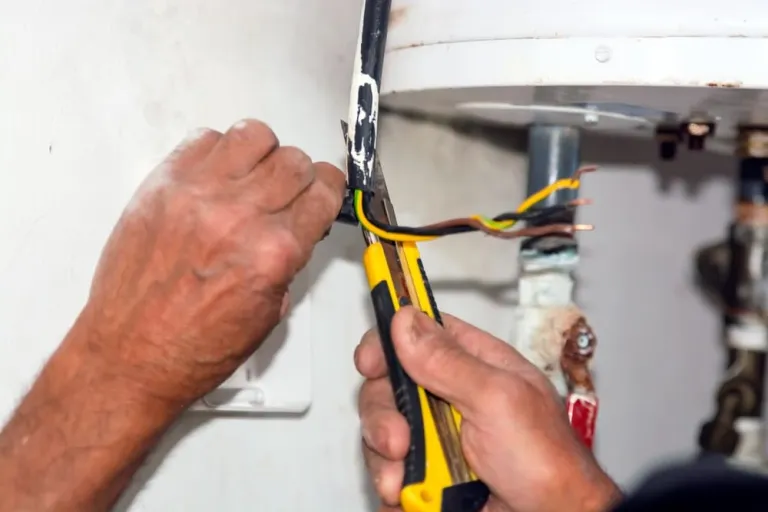
Poor installation is often the overlooked root of the problem. Loose wire connections, inadequate grounding or a wrongly routed pipe run can all affect how stably the water heater works.
Installation mistakes make the system operate outside ideal conditions. Over time, the unit will cycle on and off more often in response to risks detected by its internal safety system.
How Water Quality Affects Performance
Water quality has a big impact on how a water heater performs. Water with a high mineral content speeds up scale buildup on the heating element and the sensors.
Without regular maintenance, this buildup interferes with temperature and water flow readings. As a result, the system keeps cutting and restoring power to adjust to unstable conditions.
A Water Heater Past Its Prime
A water heater has a limited service life. Over time, its internal components lose performance even if the unit still looks fine on the outside.
If the unit is fairly old and has started cycling on and off, several key components such as the thermostat, the sensor or the heating element are probably no longer working at their best. At this stage, a full evaluation is needed to decide whether a repair is still worthwhile.
How to Run a First Diagnosis at Home
Users can begin a diagnosis by observing the on-off pattern. Note whether the problem appears at the start of heating, when water flows strongly, or after a few minutes of use.
Checking the MCB, the wiring and the water pressure can also be done as first steps. For internal components, though, it is best to bring in a technician so no extra risk is created.
Why Proper Handling Matters
A water heater that keeps cycling on and off is not a minor problem. Besides reducing comfort, it can raise energy consumption and shorten the life of the appliance.
With the right diagnosis, the source of the problem can be fixed without rushing to replace the unit. Understanding how a water heater works helps users make wiser decisions about repairs, maintenance and future replacement.