Women's Jeans for a Belly: How to Choose Comfortable Pairs
Looking for women's jeans for a belly that stay comfy and stylish? Learn how to pick the right rise, waistband, fabric and cut with this practical guide.

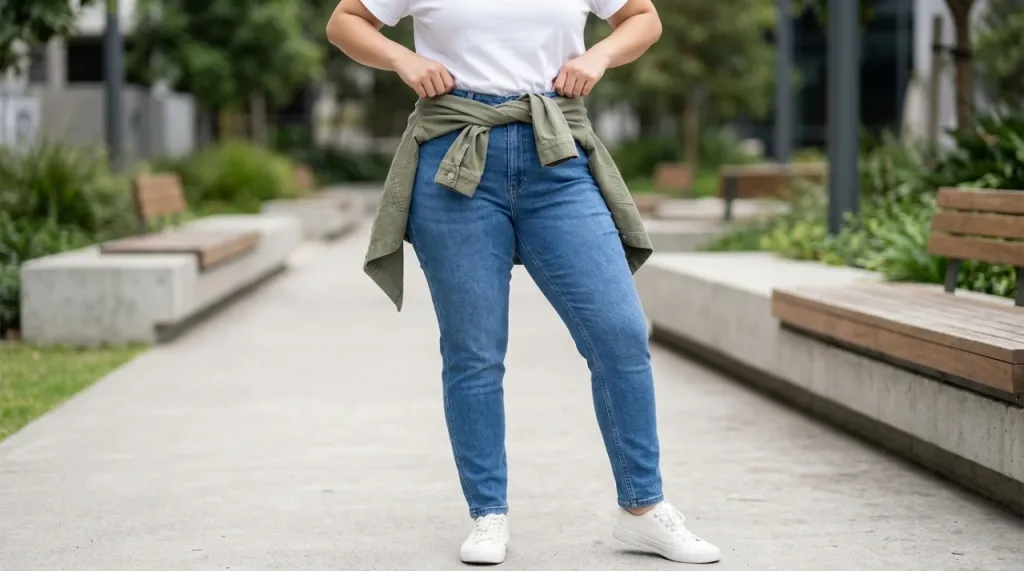
Comfortable women's jeans for a belly should have a high rise cut with an elastic or semi-elastic waistband, denim containing at least 2% elastane, and a straight or bootcut shape that doesn't press on the stomach. This combination helps support the belly without making the waist feel tight all day.
Contents
- Key Takeaways
- Introduction
- Why Does the Rise of Jeans Matter So Much?
- Waistband Types That Support Comfort
- The Role of Denim Fabric in Comfort
- Supporting Data and Facts
- Case Study: Everyday Use
- Pros and Cons
- Practical Tips and Recommendations
- Official Sizing Data
- FAQ (Frequently Asked Questions)
- Conclusion
Key Takeaways
- Choose high rise jeans because they cover and support the belly area better.
- Pay attention to the waistband type: fully elastic, semi-elastic, or a button closure with an inner panel.
- Fabric with 2 to 4% elastane gives stretch without sagging quickly.
- Avoid low rise styles because they tend to press on the belly and cause uncomfortable folds.
- Straight fit or bootcut styles help keep your proportions balanced.
- The right size comes from your natural waist measurement, not your hip measurement alone.
Introduction
Finding jeans that are comfortable over a belly is often a challenge for many women. The wrong style can cause a tight feeling around the stomach, a waistband that digs in, and discomfort when sitting for a long time. Yet by understanding the right rise, fabric and cut, jeans can still be an everyday outfit that is comfortable and looks put together. This article covers how to choose women's jeans that suit a belly, from the technical side of the fabric to the most recommended styles.
Why Does the Rise of Jeans Matter So Much?
Rise is the distance from the bottom of the fly button to the crotch seam, which determines how high the waist of the pants sits on the body. For a belly, the right rise has a big effect on comfort because it relates directly to the area that supports the stomach.
High Rise: The Top Choice
High rise jeans have a waist that sits above the navel or level with it. This style gives the belly more support because the fabric covers up to the top of the stomach, which reduces the risk of uncomfortable bunching when sitting.
Mid Rise: A Neutral Alternative
Mid rise sits right at the natural waist. This style can still work, especially when paired with a top that covers the waist area.
Low Rise: Best Avoided
Low rise tends to sit below the natural waist, so it risks pressing on the lower belly and creating an uncomfortable, unwanted "muffin top" effect.
Waistband Types That Support Comfort
- Fully elastic waistband: gives maximum flexibility and suits busy everyday activity with a lot of movement.
- Semi-elastic waistband: a front button closure combined with an elastic back, which gives a neat look while staying comfortable.
- Hidden inner panel (hidden support panel): some modern jeans add a panel of elastic fabric inside the waistband to support the belly without being visible from the outside.
The Role of Denim Fabric in Comfort
The amount of elastane or spandex in denim determines how far the fabric stretches with your movements. For comfort around the stomach, fabric with 2 to 4% elastane is generally recommended over stiff denim (rigid denim) with minimal elasticity, because it can adapt to the shape of the body when you sit, bend or move around.
Supporting Data and Facts
In studies of clothing ergonomics, excess pressure on the stomach from a waistband that is too tight can affect comfort in breathing and body movement, especially when sitting for a long time. Global fashion industry trends in recent years also show a shift toward comfort-fit designs, including the addition of elastic elements at the waist of denim pants, in response to consumers' comfort needs across a wider range of body shapes.
"A good garment should adjust to its wearer's body, not force the body to adjust to the garment." This is a general principle in functional apparel design (functional apparel design).
Case Study: Everyday Use
A wearer with a fuller belly often feels uncomfortable in low rise jeans with a stiff button waistband, especially after eating or when sitting for a long time at the office. After switching to high rise jeans with a semi-elastic waistband and about 3% elastane, complaints of pressure on the stomach generally eased because the fabric flexed more with changes in body shape through the day, without leaving a deep line on the skin.
Pros and Cons
Pros:
- High rise jeans with an elastic waistband give better support to the belly area.
- They reduce the risk of a tight feeling and deep waistband marks.
- They can still look neat and formal, especially in straight or bootcut styles.
- They are comfortable for long periods of sitting, such as office work.
Cons:
- Jeans with a fully elastic panel sometimes look less formal from the front than classic button styles.
- Some brands need special size adjustments because rise standards differ.
- Highly elastic fabric tends to stretch out faster if it is not cared for properly.
Practical Tips and Recommendations
- Measure your natural waist (the narrowest part of the body, usually above the navel) as the main reference for size.
- Make high rise your top priority, especially for everyday wear that calls for a lot of comfort.
- Try jeans on while sitting, not just standing, to make sure there is no excess pressure on the belly.
- Pair them with a slightly loose top or a partial tuck-in for a more balanced silhouette.
- Wash jeans made with elastic fabric in cold water and avoid high-heat drying so the elasticity lasts longer.
Official Sizing Data
The size references used in this article follow the common practice of size charts in Indonesia's ready-to-wear clothing industry, which usually list waist circumference, hip circumference and pants length as the three main variables that determine fit. Consumers are advised to measure their bodies directly and compare the numbers with each brand's official size chart before buying, since size standards can vary between manufacturers.
FAQ (Frequently Asked Questions)
- What style of jeans is the most comfortable for a belly? High rise jeans with an elastic or semi-elastic waistband are generally the most comfortable because they support the stomach area without pressing too hard.
- Are low rise jeans always a poor fit for a belly? Low rise is generally less recommended because sitting below the natural waist risks pressing on the lower belly, although comfort can still vary with each person's body shape.
- What fabric should I choose so jeans don't feel tight? Denim with 2 to 4% elastane generally gives enough stretch to follow your movements without feeling stiff.
- Is jeans size determined by waist or hip measurement? For comfort around the stomach, your natural waist should be the main reference, although your hip measurement still matters so the cut of the pants stays proportional.
Conclusion
Choosing comfortable women's jeans for a belly takes attention to three main things: the type of rise, the type of waistband and the fabric composition. High rise jeans with an elastic or semi-elastic waistband and enough elastane generally give the best comfort without sacrificing looks. With the right approach, jeans can remain a comfortable and stylish everyday choice for a range of body shapes.
Want to feel comfortable without a tight feeling around your stomach? Discover the Jiniso women's jeans collection, designed with rise and waistband options that support comfort all day. Visit jiniso.id now and find jeans with the fit that best suits your body.