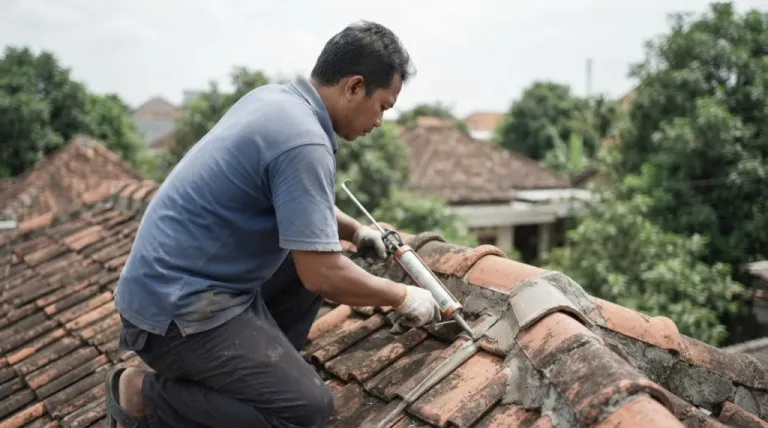
How to Fix Rainwater Seepage in Walls: Find the Source First
Walls wet after every rain? Learn how to fix rainwater seepage in walls: tell cracks, gutters, rising damp and pipe leaks apart, then dry before painting.

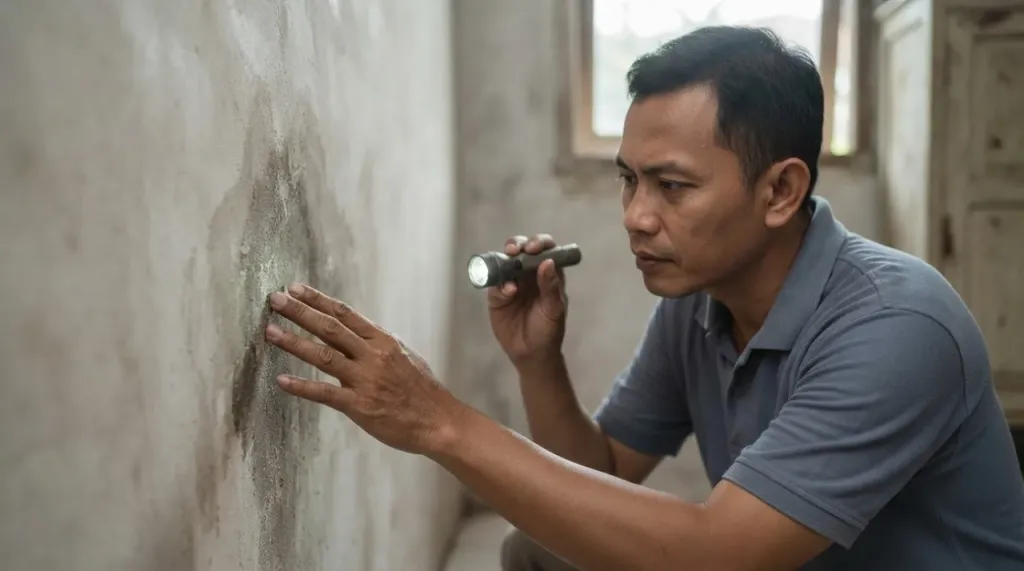
Written by Fajar Webarq. Updated October 26, 2026.
Summary
Contents
- Seepage in a wall comes from one of four sources: a cracked exterior wall, gutters or the roof, water rising from the ground, or a leaking pipe. Each source needs a different fix.
- The quickest way to tell them apart: look at where the stain is and what shape it takes, then watch whether it grows only when it rains.
- New paint or a coating lasts only if the water source has been stopped and the wall is dry. Painting a wet wall can make the paint blister and peel.
Fixing rainwater seepage in walls starts with finding the path the water takes in, not with repainting. A stain that appears after rain can come from a crack in the exterior wall, an overflowing gutter, a leaking roof, groundwater or even a pipe. BMKG, Indonesia's meteorological agency, predicts that most of the country will enter the rainy season in November 2026, so now is a good time to trace it.
Where Does the Seepage Come From?
Rainwater enters a wall through gravity, wind pressure and capillary action. The SPAB technical advice note on controlling dampness (2018) divides the sources into rain penetration, rising damp from the ground, plumbing leaks and condensation. It was written for old buildings in the UK, but its pattern of symptoms is a useful general guide.
Rain can enter directly through open cracks and joints, or indirectly from a blocked gutter. SPAB notes that modern cement mortar often lets water through hairline cracks. Water from a roof can also travel along the rafters and show up inside the house some distance from the leak.
Condensation should be crossed off the list first. According to SPAB, condensation often appears in room corners and behind cupboards and is often worse in rainy weather, but it does not depend on rain. If the stain stays during the dry season, suspect condensation, a pipe or rising damp.
Table: How to Tell the Sources of Seepage Apart
The location of the stain, its shape and its link to rain are the easiest clues. Rain seepage shows up as patches that appear or grow after rain, water from the ground forms a line at the foot of the wall, and a leaking pipe stays wet without waiting for rain. Match what you see to the table below.
| Source | Stain location and shape | Link to rain | Quick check |
|---|---|---|---|
| Cracked or porous exterior wall | Patches on the side of the wall most exposed to rain, often near a crack or joint | Appears after rain, may dry out within a few days | Inspect the outside: hairline cracks, peeling paint, moss |
| Gutter, downpipe or roof | Patches near the gutter or downpipe, or below where the roof meets the wall | Appears during or soon after heavy rain | Watch the gutter and downpipe in the rain: is it overflowing or spraying? |
| Water rising from the ground (capillary action) | A sharp wet-dry line at the foot of the wall, sometimes with white salts | Fairly constant, not very dependent on rain | Check whether the soil, paving or drain outside is higher than the floor |
| Leaking water pipe | A localized stain, sometimes fan-shaped, along the pipe route | Wet even when it is not raining; water bill goes up | Run the 2-hour water meter test (see step 4) |
The patterns above are summarized from SPAB. For rising damp, SPAB notes the height can be as little as 10 to 50 mm above the floor, but can reach 900 mm or more, depending on the outside ground level, the type of masonry, the water table and evaporation.
Steps to Check the Source of Seepage
Work through the checks in order, starting with the easiest and safest, and do some of them while it is raining. The goal is not to start repairs but to confirm the source. SPAB recommends basic maintenance first, such as clearing blocked drains, and then watching whether the problem goes away before any major work.
- Make the electricity safe. If the seepage is near an outlet, switch or cable, turn that circuit off. PLN, the state electricity company, advises switching off the power at the MCB on the kWh meter if water is leaking near the electrical installation. If the breaker often trips when it rains, also read MCB keeps tripping.
- Mark the edge of the stain. Draw a pencil line around the stain and photograph it every day. A stain that grows after rain and then shrinks points to rain seepage.
- Watch the gutter and downpipe in heavy rain. SPAB explains that a gutter clogged with leaves and moss can overflow, and a blocked downpipe makes water back up and spray out of a joint or crack onto the wall beside it.
- Test for a pipe leak. Write down the water meter reading, use no water for 2 hours, then check again. EPA WaterSense says a meter that moves during that period signals a possible leak. If you use a well pump, the faucet-closing test in the water pump won't turn off guide can help.
- Inspect the outside of the wall. Look for cracks, open joints, peeling paint and moss. Measure the widest crack and note where it is.
- Inspect the foot of the wall. See whether the soil, paving or drain outside is higher than the indoor floor, and whether any drain is leaking. SPAB notes that "rising damp" problems are often actually caused by a leaking drain or pipe near the foot of the wall.
How to Fix Seepage Based on Its Source
A repair has to stop the water where it gets in. Cracks in the exterior wall are sealed and coated with a waterproof coating, gutters are cleaned and their joints repaired, the foot of the wall is kept away from wet sources, and a leaking pipe is replaced. Coating the inside of the wall without closing the water's path in only moves the problem somewhere else.
Exterior walls and hairline cracks
Clean the surface of moss, dust and loose paint. On crack width, the BRE categories classify cracks up to 5 mm as a cosmetic issue that can be dealt with by redecorating. Wider cracks, or cracks that make doors and windows stick, are functional or structural problems and need an expert assessment.
For hairline cracks, an elastic acrylic coating for exterior walls is designed to bridge fine cracks. The SikaCoat Plus (2024) data sheet, for example, calls for a clean, sound surface, at least two thin coats, and no application if rain is coming. To seal gaps, the same manufacturer's catalog recommends a reinforcing membrane. Follow the data sheet for the product you use, including when it will be overpainted with exterior paint.
Gutters and downpipes
Clear leaves, moss and debris from the gutter and the downpipe strainer, then repair any leaking joints. SPAB warns that cracks in a downpipe fixed against the wall are often hidden. If the source turns out to be the roof, the guide on what to use to patch a leaking roof covers materials for each roof type.
Water rising at the foot of the wall
Start with the causes outside: lower any soil or paving that sits against the foot of the wall, repair leaking drains and direct rainwater away from the wall. For the base of a wall and wet areas, a cement maker describes waterproof plaster (trasram) with a richer cement mix. The simple-house prototype design from the Ministry of Public Works and Housing (PUPR) specifies trasram plaster of 1 cement : 2 sand, compared with ordinary plaster at 1 : 4. Stripping and replastering the foot of a wall is best left to a builder or contractor.
Pipe leaks inside the wall
A pipe that leaks inside a wall needs to be opened up and replaced by a plumber. Do not cover the stain with a coating before the leak is fixed.
Drying and Repainting the Wall
A wall can be repainted only after the water source has been stopped and the wall is completely dry. Paint over a wet wall can lose its grip, blister and peel, as happens when wall paint peels because of damp. The safe dryness limit differs by source and product, so measure it rather than just feeling the wall.
According to the Master Painters Institute (MPI), as cited by Dunn-Edwards, the moisture content of concrete, brick and plaster should not exceed 12% before painting. Excess moisture causes alkali problems, efflorescence (white salts), loss of adhesion and delamination. Coating data sheets set their own requirements: SikaCoat Plus asks for new plaster at least 3 days old with moisture content below 25%, while SikaCoat-333 (2026) asks for concrete more than 28 days old with moisture content below 4%. The numbers differ because the measuring methods and product types differ.
If the wall already has mold, follow the EPA guidance. Wet materials should be dried within 24 to 48 hours, mold on hard surfaces scrubbed with detergent and water and then dried, and moldy surfaces must not be painted over directly. Wear gloves, safety goggles and an N-95 mask.
When to Call a Contractor
Call a contractor or building expert if the source is somewhere hard to reach or involves the structure. Work at height, stripping plaster and repairing pipes inside walls are safer left to an experienced tradesperson. SPAB also recommends an independent diagnosis, separate from whoever is offering the repair.
- Cracks wider than 5 mm, getting wider over time, or accompanied by sticking doors and windows.
- Seepage comes from a concrete roof slab, a roof or a gutter that has to be climbed to.
- The wet line at the foot of the wall remains after the drains and soil outside have been fixed.
- Mold is spreading. EPA suggests professional help when the area is larger than 10 square feet (about 0.93 m², our calculation).
- The pipe leak is inside a wall or floor.
Frequently Asked Questions
How do I fix water seeping through a wall inside the house?
Find the source from the outside first: wall cracks, gutters, the foot of the wall or a pipe. Once the source is stopped, dry the wall, clean off any mold and repaint. Coating only the inside does not stop the water coming in.
What should I use on a damp wall to dry it?
There is no single material for every case. Exterior wall cracks are handled with crack sealer and an elastic waterproof coating, a base wall that is often wet with trasram plaster, and a leaking pipe by replacing the pipe. Good ventilation helps the wall dry.
What should I do about a damp wall with mold?
Stop the water source, then scrub mold on hard surfaces with detergent and water and let it dry. Do not paint straight over it. If the mold is spreading, consider professional help.
Why does wall paint peel because of damp?
Water trapped behind the paint damages its adhesion and carries salts to the surface. As a result the paint blisters, peels or develops white patches. Repainting lasts only once the wall is dry.
How long should a wall dry before repainting?
There is no number of days that applies to every wall. A more reliable guide is moisture content, for example a maximum of 12% according to MPI, or the requirements in the data sheet of the paint and coating you use.
Next Steps
If the seepage turns out to come from the roof or a gutter above the wall, continue to the guide on what to use to patch a leaking roof. All our leak and building maintenance guides are in the Building & Leaks hub.