How to Patch a Leaking Roof: Materials for Each Roof Type
What do you patch a leaking roof with? See patching materials for tile, metal, fiber cement, concrete, polycarbonate roofs in one table, plus safety rules.

Written by Fajar Webarq. Updated October 26, 2026.
Summary
Contents
- The material for patching a leaking roof depends on the roof type. Broken tiles are replaced, spandek screws are replaced along with their rubber washers, concrete slabs get a waterproof membrane, and polycarbonate takes a special silicone.
- Old fiber cement roofs may contain asbestos. Do not sand, cut, dry-sweep or walk on them.
- Going up on a roof is high-risk work. Wait for the roof to dry, use a secured ladder, and leave fragile or tall roofs to an experienced tradesperson.
A leaking roof is patched according to the roof type and the leak point, because each roofing material has its own requirements: polycarbonate only works with certain sealants, and coated steel does not work with sealants that have acidic additives. This guide has a table of materials by roof type, a safe patching sequence, and the point at which the job should go to a professional. If water from the roof has already seeped into the walls, continue afterward with the wall seepage guide.
Emergency Steps When the Roof Leaks
While it is still raining, the goal is to limit the damage, not to patch. Catch the water, move electronics away, and secure the electricity if water is dripping near lights, outlets or ceiling cables. Patching comes only after the rain stops and the roof is dry, because many patching materials must not be rained on before they cure.
- Catch the water and move belongings. Put a bucket under the drip and move electronic devices.
- Secure the electricity. PLN, Indonesia's state electricity company, advises switching off the power at the MCB (circuit breaker) by the kWh meter if water is leaking near the installation. If the breaker trips during rain, read MCB keeps tripping.
- Mark the drip point on the ceiling and photograph it. The SPAB guide on dampness points out that leaking water can travel along the rafters and appear some distance from the real leak point, so a spot on the ceiling is only a first clue.
- Do not go up on the roof in the rain. Wait until it stops and the roof surface is dry.
Patching Materials by Roof Type
Each roof type has different weak points and different patching materials. The table below is compiled from the manufacturer data sheets and technical guides cited beneath it. The product names are only examples from the data sheets we read; other products with equivalent specifications can be used if their data sheet names your roof type.
| Roof type | What to check | Suitable patching material | Avoid |
|---|---|---|---|
| Clay/concrete roof tiles | Broken or slipped tiles, cracked ridge (nok), tile-to-wall joints | Replace broken tiles; reset slipped tiles; elastic acrylic coating for the ridge and tile-to-wall joints | Covering the whole roof with a bitumen coating over the tiles, or a spray coating beneath them |
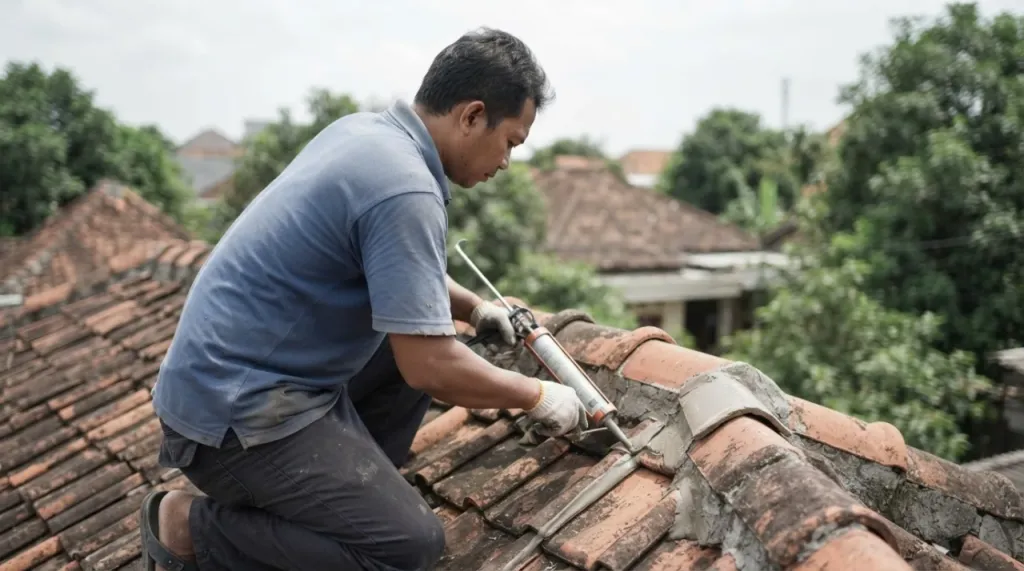
| Metal roof tiles, spandek, zinc sheet | Loose screws or damaged rubber washers, lap joints (overlap), rust | New screws with EPDM rubber washers; neutral silicone made for coated steel; acrylic coating for joints and screw heads | Acid-based sealants (smell of vinegar or ammonia), galvanized washers, solvents and wire brushes, metal swarf left behind after drilling |
| Fiber cement (including asbestos) | Cracked or broken sheets, screw holes, joints | Mastic/sealant for gaps, then paint or a coating with no sanding; or cover with sealed non-asbestos panels | Sanding, cutting, sawing, dry-sweeping and walking on the sheets |
| Concrete slab roof | Cracks, standing water, damaged waterproof layer, around drain openings | A dedicated crack sealer after the crack is cleaned; elastic liquid membrane for exposed slabs; fiber-reinforced cementitious polymer coating if it will be covered with screed | Applying it while the slab is wet or has standing water; using an "exposed" coating under tiles, or the reverse |
| Polycarbonate | Cracks around screws, loose sealant, cracked sheets | Neutral silicone made for polycarbonate; screws with dome seals; replace cracked sheets | Sealants and cleaners the manufacturer has not approved, solvents, walking on the sheets |
The basis for each row:
- Tiles. SPAB says slipped tiles and damaged flashing or joint mortar can cause major damage, and that individual tiles can be replaced. SPAB also sees a bitumen coating over a tile roof as a false economy because it blocks inspection and reduces ventilation. The Sika Indonesia catalog lists an acrylic coating for tiles, ridges and tile-to-wall joints.
- Metal. NS BlueScope (2026) requires EPDM rubber washers, warns against unsuitable accessories such as galvanized washers that can rust, asks that metal swarf be swept away so it does not leave rust stains, and forbids solvent-based cleaners and wire brushes. Lysaght (2026) recommends a sealant made for coated steel and warns against sealants with acidic additives that smell of vinegar or ammonia.
- Fiber cement. The HSE a13 sheet uses mastic or sealant for gaps, then paints the damaged area or covers it with non-asbestos panels. The HSE a16 sheet forbids sanding the surface before painting. SikaCoat Plus lists asbestos roofs, tiles and zinc sheet for sealing joints and screws.
- Concrete slab. SikaCoat-333 (2026) is an example of a membrane for exposed roofs: concrete older than 28 days, moisture content below 4%, no standing water, at least two coats. The Sika catalog places a fiber-reinforced cementitious polymer coating on roofs that will be covered with screed, and epoxy crack sealers after the crack has been widened and cleaned.
- Polycarbonate. Impack Pratama asks for holes drilled 3 to 5 mm larger than the fastener diameter, rust-proof fasteners with dome seals, and forbids solvents or abrasive cleaners. The Soudal data sheet names a special neutral silicone that does not cause stress cracking in polycarbonate. Palram asks that any sealant outside its recommended list be approved by the dealer first; otherwise the warranty is void.
A Safe Sequence for Patching a Roof
A patch that lasts follows the same sequence for almost every roof type: confirm the leak point, wait for it to dry, clean, patch with the material from the table, then protect it from rain until it cures. The coating data sheets we cite ask for a clean, sound surface and two or more coats, not one thick coat.
- Confirm the leak point from inside (ceiling, rafters) and from outside. Check the gutters too, because SPAB notes that a gutter blocked with leaves can overflow.
- Wait for the roof and surfaces to dry. SikaCoat Plus forbids application when rain is coming, and SikaCoat-333 asks that a new layer be protected from rain until fully cured.
- Clean the surface of dust, moss and loose material. For fiber cement, clean with a damp cloth, not a dry brush.
- Patch according to the roof type, following the table and the data sheet of the material you use.
- Test the result in the next rain by checking the drip points you marked.
Staying Safe on the Roof
Roof work is very dangerous even when it lasts only a few minutes, according to HSE, the UK's workplace safety regulator. Nearly one in five deaths in construction work there involves roof work. HSE guidance highlights two main hazards: falling from the roof edge and falling through fragile surfaces, so both must be planned for before going up.
- Treat every roof as fragile until a competent person confirms otherwise. HSE classes unreinforced fiber cement sheets, translucent roofs and rusted metal sheets as fragile surfaces.
- Do not walk on polycarbonate sheets. Palram asks that sheets be treated as unable to bear a person's weight, and that crawl boards resting on the frame be used.
- Use a secured ladder. For short tasks, HSE names secured ladders and roof ladders as options.
- Do not work alone, and do not go up when the roof is wet or windy.
Fiber Cement Roofs That Contain Asbestos
Older fiber cement roofs may contain asbestos, and asbestos fibers are dangerous when inhaled. WHO states that all forms of asbestos are carcinogenic to humans and cites asbestos-cement roof tiles as an example of asbestos-containing building materials. If you do not know whether your roof contains asbestos, treat it as if it does.
According to the WHO fact sheet (August 2026), asbestos exposure causes cancer of the lung, larynx and ovary, as well as mesothelioma and asbestosis. WHO also notes that anyone doing maintenance or demolition work on buildings containing asbestos may be exposed. A policy analyst's article from the Health Development Policy Agency of Indonesia's Ministry of Health (2025) says that cutting, sawing or even sweeping an old asbestos roof can release fibers, that symptoms of disease can appear 20 to 40 years after exposure, and that there is no safe exposure limit.
For that reason, patch a fiber cement roof only in ways that do not damage the surface, as in the table. HSE also warns that cement-asbestos roofs are always fragile and cannot bear weight. Badly damaged sheets, or plans to replace the roof, are best handled by a contractor who understands asbestos handling.
Leaking Roof and Damp Walls
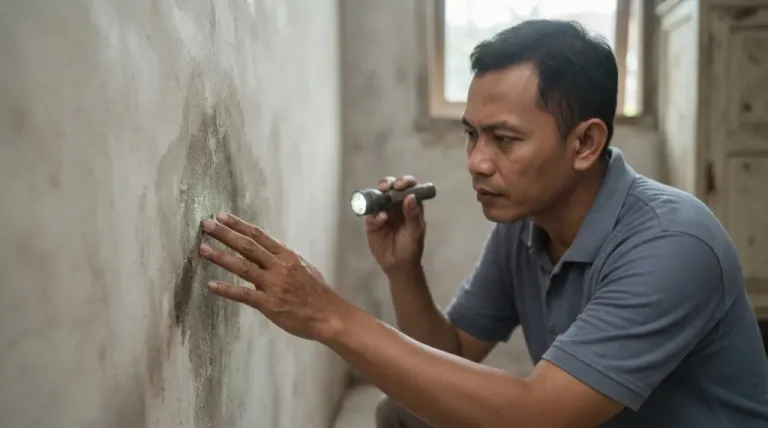
Water from a leaking roof or gutter often does not drip through the ceiling but runs down into the top of the wall and shows up as seepage. If a stain on the wall appears directly below the gutter, the fascia board or the joint between the roof and the wall, the source is probably above, not in the wall itself.
SPAB notes that a downpipe blocked with leaves makes water back up and then spray out of joints or cracks onto the adjacent wall. Close off the source on the roof and gutter first, then dry and repair the wall by following the guide on how to fix rainwater seepage in walls.
When to Call a Tradesperson or Contractor
Leave the job to a tradesperson or contractor if the roof is tall, steep or fragile, or if the damage goes beyond a local patch. SPAB notes that individual tiles can be replaced, but at some point the whole roof covering needs to be stripped and relaid. The following signs point to that need.
- Many cracked tiles, or a roof frame that looks rotten and sagging.
- A fiber cement roof that is cracked over a wide area or needs replacing.
- A concrete slab cracked in many places or frequently holding standing water.
- The leak returns at the same spot after being patched.
Frequently Asked Questions
What is the quick fix for a leaking roof?
While it is raining, catch the water, secure the electricity and mark the drip points. Once the roof is dry, patch according to the roof type. An emergency patch on a wet surface usually does not last.
What do you patch a leaking spandek roof with?
Replace screws whose rubber washers are damaged with new screws that have EPDM rubber washers, then seal the joint gaps with a neutral silicone made for coated steel. Avoid sealants that smell of vinegar or ammonia.
Can a leaking tile roof be painted over entirely with a waterproof coating?
For broken tiles, replacing them is the better fix. An elastic acrylic coating is useful for the ridge and tile-to-wall joints. SPAB considers a bitumen or spray coating over a whole tile roof a hindrance to inspection that also reduces ventilation.
What do you patch a leaking asbestos roof with?
Mastic or sealant for the gaps, then paint or a coating applied without sanding, following HSE guidance. Do not walk on, sand or cut the sheets.
Why does a leaking roof make the walls damp?
Water from the roof, gutter or downpipe runs down into the top of the wall and soaks in. Fix the source above first, then dry and repair the wall.
Next Steps
If the roof has been patched but the wall below is still wet after rain, follow the guide on how to fix rainwater seepage in walls. All the leak and building maintenance guides are in the Building & Leaks hub.