
Precision Agriculture: Reducing Farming's Carbon Emissions
Precision agriculture uses sensors, drones and data to cut fertilizer, water and burning, lowering farm emissions. See real cases and Indonesia's hurdles.

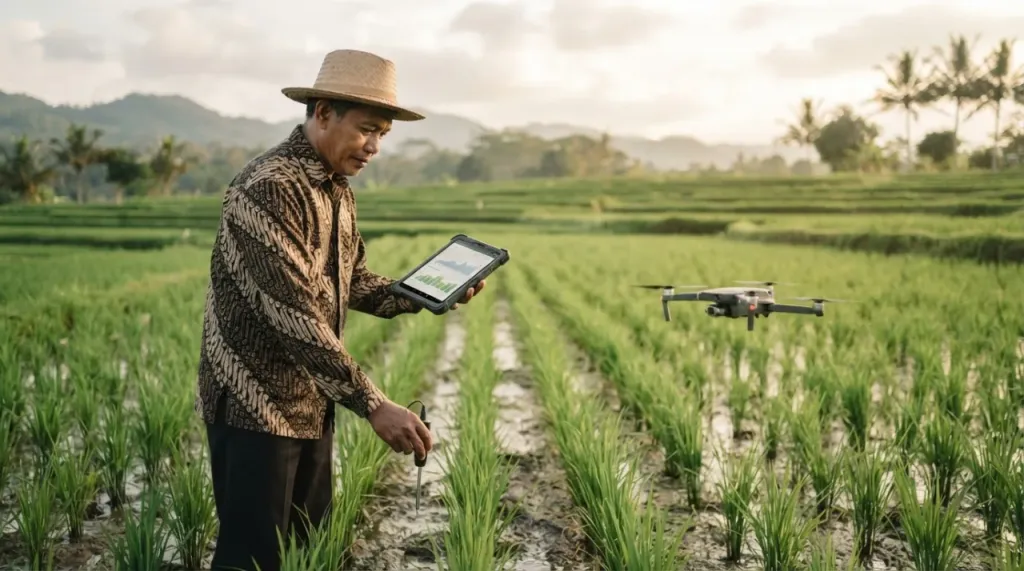
The issue of carbon emissions does not belong only to big factories or vehicles on the highway. Agriculture, long associated with nature and greenery, turns out to account for a significant share of total global greenhouse gas emissions. Ironically, the activity meant to feed the world also hurts the planet. But hope is not lost. An innovation called precision agriculture has arrived as a modern answer for balancing food production with environmental sustainability.
Carbon Emissions From Farming: A Fact That Rarely Gets Attention
Global agriculture accounts for around 10 to 12% of the world's total carbon emissions, according to a report from the Intergovernmental Panel on Climate Change (IPCC). The figure can climb as high as 25% when emissions from land use change, deforestation and post-harvest activities such as distribution and storage are included.
In Indonesia, agriculture is the second-largest source of greenhouse gas emissions after energy. Data from the Ministry of Environment and Forestry (KLHK) show that in 2022, emissions from agriculture reached more than 110 million tons of CO₂ equivalent, dominated by activities such as land burning, nitrogen fertilizer use and enteric fermentation from livestock.
What Is Precision Agriculture?
Precision agriculture is a modern approach to managing farmland and crops that uses technology to optimize inputs (such as water, fertilizer and pesticides) to match the specific needs of the crop and the condition of the soil. In other words, not all land is treated the same. Treatment is adjusted based on data and analysis.
The technologies used include:
-
Soil and moisture sensors
-
Land-mapping drones
-
GPS for precision planting
-
Weather monitoring apps
-
Artificial intelligence algorithms for fertilizer recommendations
The main goal is to raise productivity while cutting the waste and emissions that conventional farming produces.
How Does Precision Agriculture Reduce Carbon Emissions?
-
Optimizing Nitrogen Fertilizer Use
Synthetic nitrogen fertilizer is known as a source of carbon emissions and other greenhouse gases such as N₂O (nitrous oxide), which has a greenhouse effect 300 times stronger than CO₂. With precision technology, fertilizer is applied according to the plants' actual needs, which avoids overuse and cuts emissions. -
More Efficient Use of Water and Energy
Precision irrigation systems, such as sensor-controlled drip irrigation, can save water while lowering the energy used for pumping. This matters especially in farming areas that depend on electric or diesel-powered irrigation. -
Less Land Burning
One of the big sources of emissions in agriculture is the practice of clearing land by burning, which is common among small-scale farmers. With a precision approach, land can be managed and mapped more efficiently, so burning can be reduced or even eliminated. -
Ongoing Soil Monitoring and Improvement
Soil scanning technology can detect fertility, pH and organic carbon levels. With this data, farmers can apply soil conservation strategies, such as planting cover crops and rotating crops, that help store more carbon in the soil.
Case Studies and Real Examples
One successful example of precision agriculture comes from the "Smart Farming" project run by PT Mitra Sejahtera Membangun Bangsa (MSMB) in Central Java. They use IoT sensors and a digital platform to help small farmers manage irrigation and fertilizing. As a result, fertilizer use fell by as much as 30%, and harvests rose by 20 to 25%.
Another study by the FAO showed that applying precision techniques on corn and wheat fields in countries such as the United States and Canada cut CO₂ emissions by as much as 15% per hectare while also reducing production costs significantly.
Challenges and Barriers to Adoption in Indonesia
Although promising, precision agriculture still faces a number of challenges in Indonesia:
-
High Upfront Costs
Technology such as drones, sensors and analytics software is still fairly expensive for small farmers. This calls for government incentives or special subsidy schemes. -
Low Digital Literacy
Not all farmers have access to technology-based apps or the skills to use them. Mentoring and training are crucial. -
Limited Internet Infrastructure
In many remote farming areas, connectivity is still a problem, yet precision agriculture relies heavily on real-time data. -
Lack of Integration With National Policy
At present, national agricultural policy is not yet fully integrated with a low-emission, technology-based approach. The agriculture ministry and the environment ministry need to work together to make the most of this potential.
A Figure of Speech to Describe the Transformation
Figure of speech: “Precision agriculture is a symphony of technology and nature dancing in the fields of the future.” This sentence describes how harmony between innovation and nature can create a farming system that is both productive and sustainable.
The Role of Young People and Agritech Startups
Interestingly, many young people and startup founders are now moving into agritech. They bring fresh energy and a more adaptive approach to technology. Apps such as TaniHub, Habibi Garden and eFishery show how technology is being used to bring farmers closer to modern farming systems.
Vocational education and digital training for young farmers are also starting to spread through various non-governmental organizations and agribusiness communities. This is an important foundation for the future of low-emission agriculture in Indonesia.
Concrete Steps Toward Low-Emission Farming
Some important strategies for supporting precision agriculture in the context of cutting carbon emissions include:
-
Developing incentive policies for farmers who adopt low-emission methods.
-
Supporting research and development of locally based farming tools.
-
Collaboration among the private sector, government and academics.
-
Building digital infrastructure in farming areas.
With the right policy direction, precision agriculture can be not only a solution to the climate crisis but also a tool for empowering farmers and strengthening national food security.
Closing: Farming That Saves the Planet
Agriculture does not have to be an enemy of the environment. With a precision approach and the right technology, our fields can become carbon sinks rather than carbon producers. The road to a future with low carbon emissions is not just a dream but a real step we can begin today.
If you are a farmer, an agribusiness operator or part of an institution that wants to put an emissions reduction strategy into practice in agriculture, don't hesitate to contact Mutu International. They are ready to help you calculate, manage and optimize eco-friendly practices that meet global standards and local needs.